Introducing a Dog and Cat with Room to Retreat
Use barriers, calm handling and safe escape routes to build a carefully supervised first relationship.
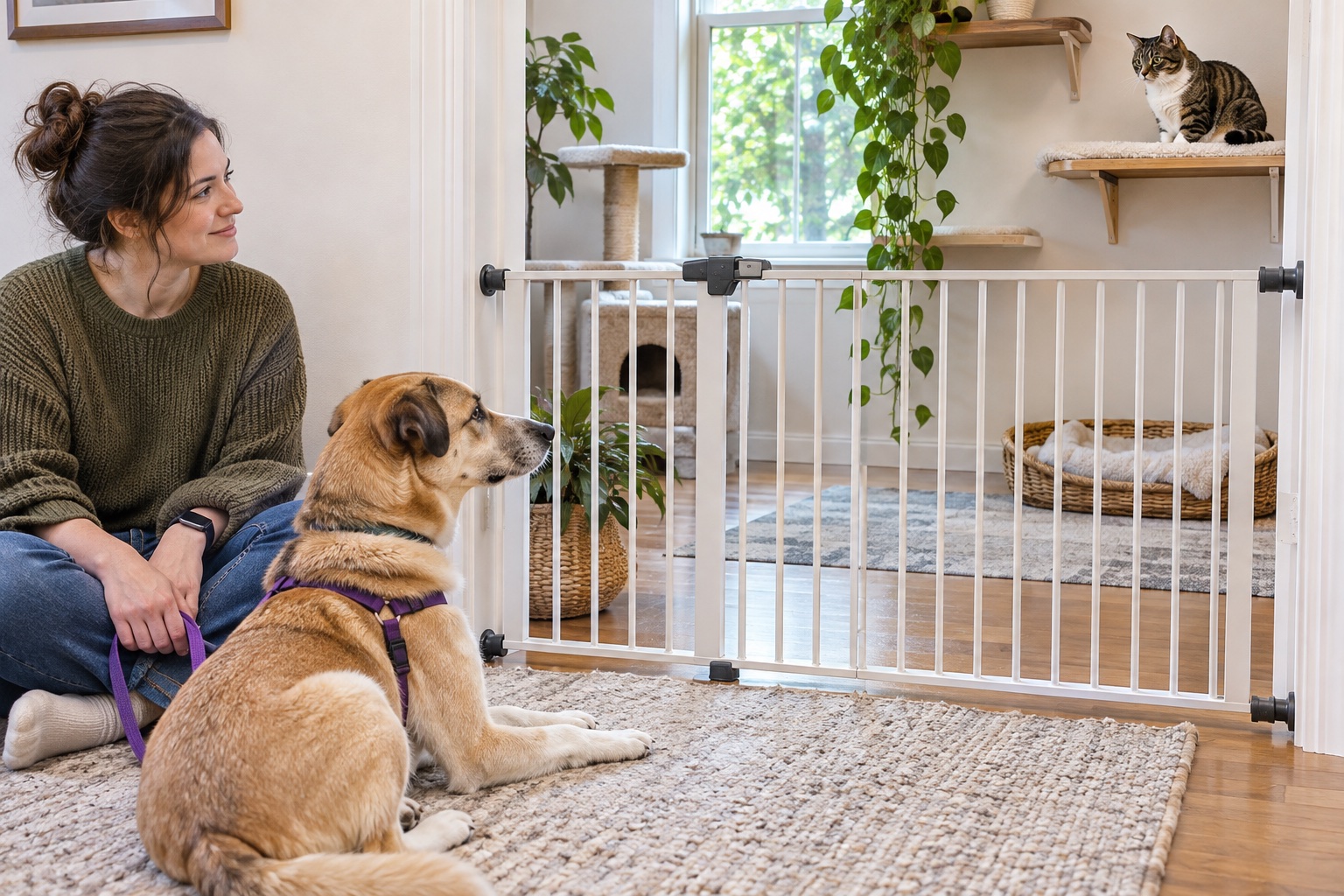
Keep the cat's escape routes open and reward the dog's ability to disengage, with safety managed throughout.
Cover illustration generated with AI. About our images.
A dog and cat can share a home successfully, but compatibility is individual. Size, chasing behavior, previous experience and confidence all matter. Plan for safety before arranging a face-to-face meeting.
Protect the cat's space
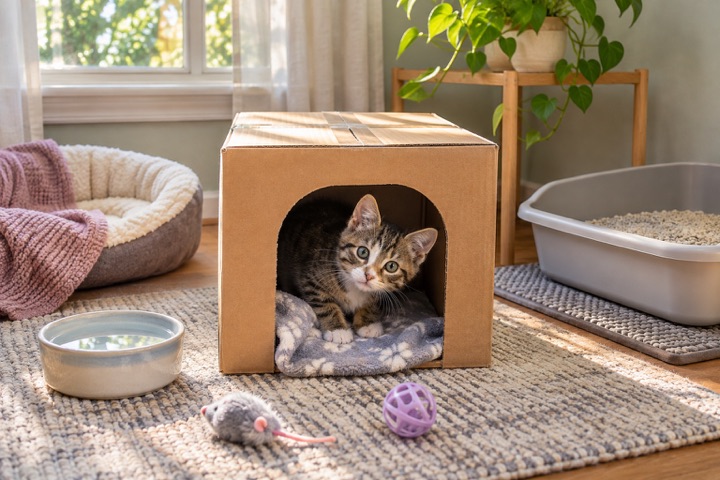
Give the cat a dog-free room and secure elevated resting places. Food, water and litter should remain accessible without passing the dog. Let both animals become familiar with household sounds and scent while separated.
Reward calm awareness
Begin with controlled viewing through a secure barrier at a comfortable distance. Reward the dog for noticing the cat and then disengaging. Keep the dog on suitable equipment when needed, without creating leash tension or forcing a close approach.
A cat should never be held in place for the dog to inspect. It needs the option to hide or move away.
Watch for fixation
Stiff staring, stalking, chasing attempts or an inability to respond to the handler are reasons to increase separation and seek help. A wagging tail alone does not establish safety.
Expand access cautiously
Use short supervised sessions only when both animals remain comfortable. Preserve barriers whenever you cannot supervise, and avoid assuming that one calm meeting proves they are safe alone together.
Some combinations need professional assessment, and some may not be compatible. A peaceful home depends on managing the animals you have, not on expecting every dog and cat to become friends.
General educational information. For individual health concerns, consult your veterinarian. Suggest a correction.