A Second Cat at Home: Make Introductions Slowly
Create separate resources and build familiarity in stages before asking two cats to share a room.
Use separate resources and gradual exposure, with each cat's comfort setting the pace.
Cover illustration generated with AI. About our images.
A second cat changes the social landscape of a home. Some cats become close companions; others learn to share space peacefully without seeking contact. The aim is comfort and choice, not a forced friendship on a fixed timetable.
Begin with separate spaces
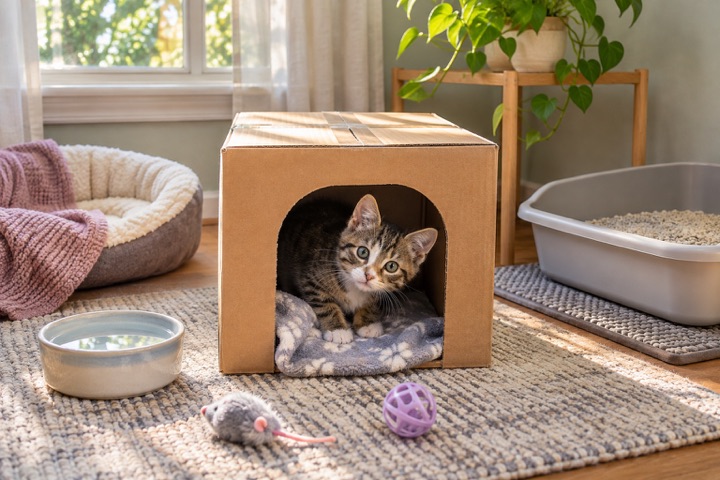
Prepare a comfortable room for the newcomer with its own food, water, litter, hiding place and scratching surface. Keep the resident cat's familiar resources available. Arrange appropriate veterinary care and discuss health precautions before direct contact.
Introduce scent before proximity
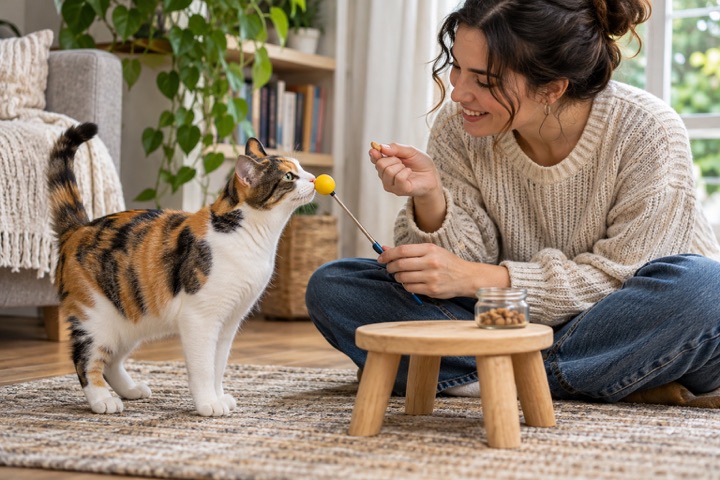
Exchange bedding or allow each cat to explore the other's area separately when both are comfortable. Pair awareness of the other cat with pleasant activities at a distance. Do not force a cat to investigate a scented object.
Build controlled visual contact
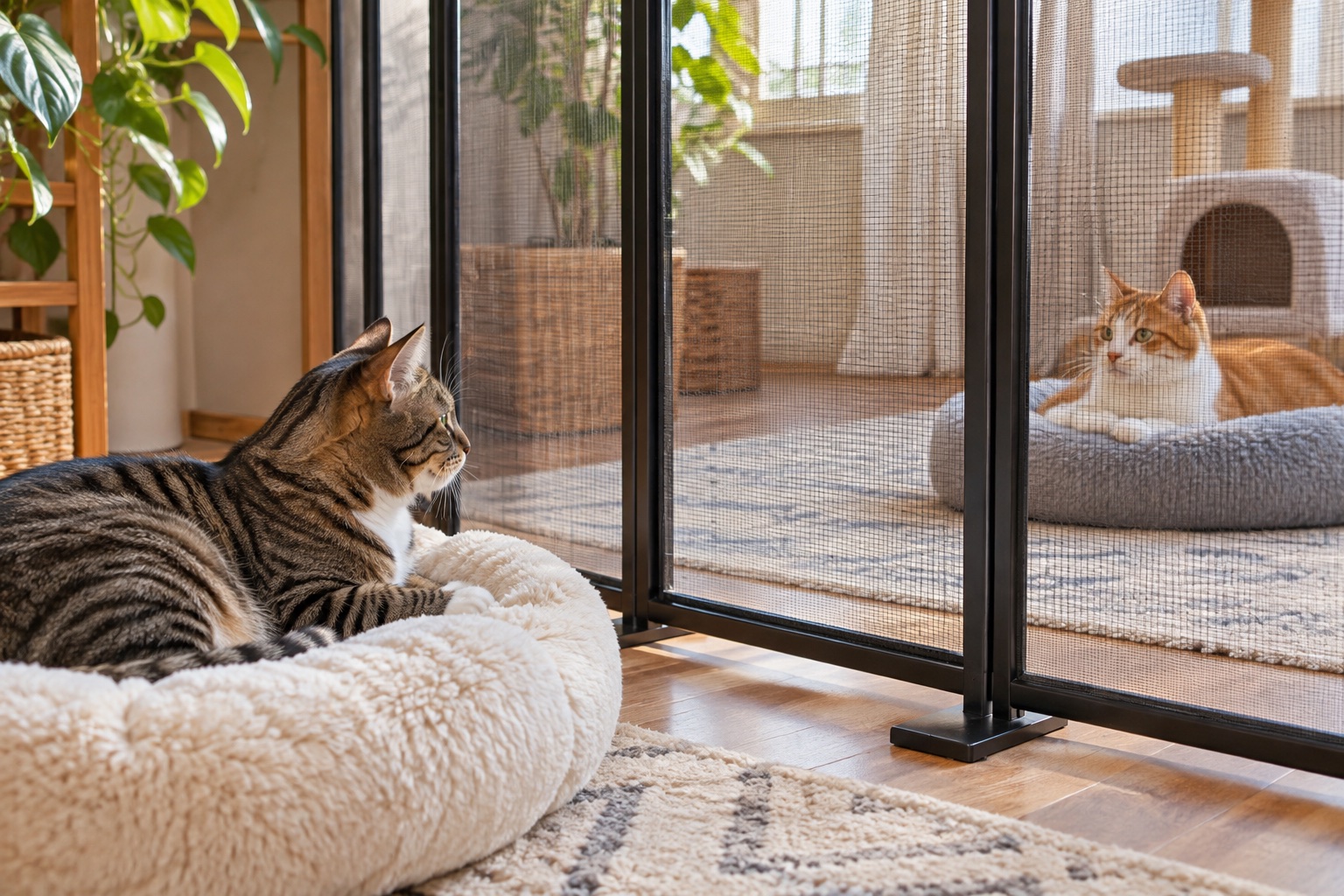
Use a secure barrier only when the cats can remain relaxed nearby. Keep sessions short and provide escape routes. Increase distance or return to an earlier stage if there is prolonged staring, stalking, blocking or distress.
Share space gradually
Supervise early meetings and offer multiple routes through the room. Distribute resources rather than clustering everything together. Continue separate rest and feeding options even after meetings go well.
Avoid letting the cats 'fight it out.' Do not reach between fighting cats with bare hands; separate safely and seek advice if conflict persists.
Progress may take weeks or longer. Quiet coexistence is a worthwhile outcome, and repeated tension calls for a slower plan with veterinary or qualified behavioral support.
General educational information. For individual health concerns, consult your veterinarian. Suggest a correction.