Why a Neutered Cat May Still Urinate Outside the Box
Separate medical problems, marking and litter-box avoidance so you can choose the right next step.
Rule out illness first, then address marking triggers and litter-box access without punishment.
Cover illustration generated with AI. About our images.
Neutering can reduce hormone-related marking, but it does not prevent every urinary problem. A cat leaving urine outside the box may be marking, avoiding an uncomfortable setup or experiencing illness. Begin with observation and a veterinary assessment rather than assuming deliberate misbehavior.
Describe what you see
Spraying often involves a standing posture and a small amount directed at a vertical surface. Toileting outside the box more often involves squatting and a larger puddle. These patterns are clues, not a diagnosis, and they can overlap.
Repeated straining, blood, distress or little to no urine needs urgent veterinary attention. A blocked urinary tract is an emergency, particularly in male cats.
Review the environment
Changes in household animals, outside cats visible through a window or tension around resources can contribute to marking. Provide separate feeding and resting places, safe routes through rooms and enough accessible litter boxes. Watch interactions rather than relying on the absence of obvious fighting.
Clean and reset
Use a pet-appropriate enzymatic cleaner according to its instructions, keeping the cat away until the area is safe to use. Avoid harsh scents and punishment. Rubbing the cat's nose in a spot or chasing it can increase distress without resolving the cause.
Build an individual plan
Pheromone products may be worth discussing as an adjunct, but no spray guarantees a cure. Persistent cases may need a veterinary behavior plan alongside medical treatment or environmental changes.
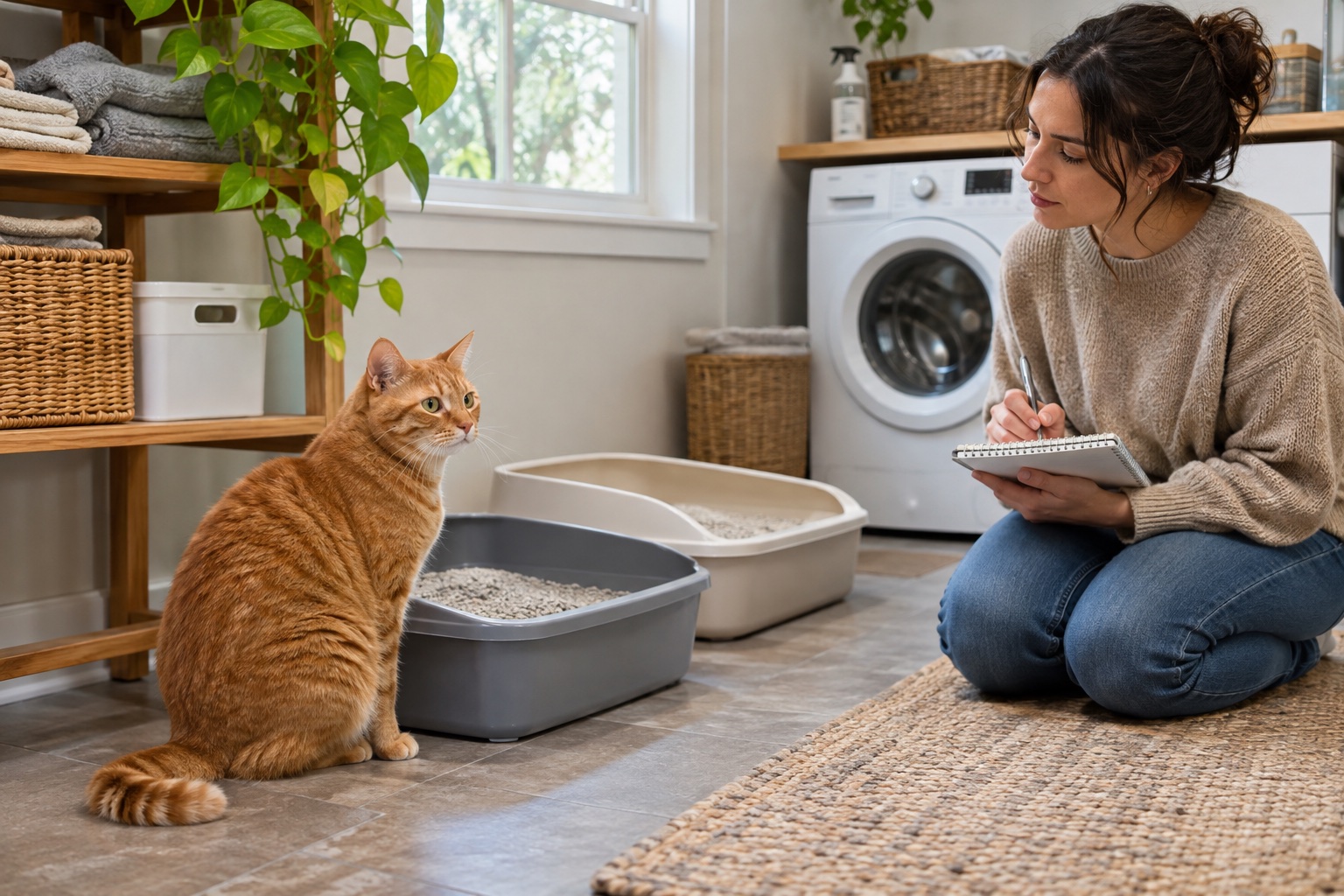
Keep a simple record of location, timing and recent household events. The pattern often reveals what needs to change more clearly than another cleaning product does.
General educational information. For individual health concerns, consult your veterinarian. Suggest a correction.