Loose-Leash Walking: A Conversation in Small Steps
Use movement, sniffing and timely rewards to build a walk that feels comfortable for both of you.
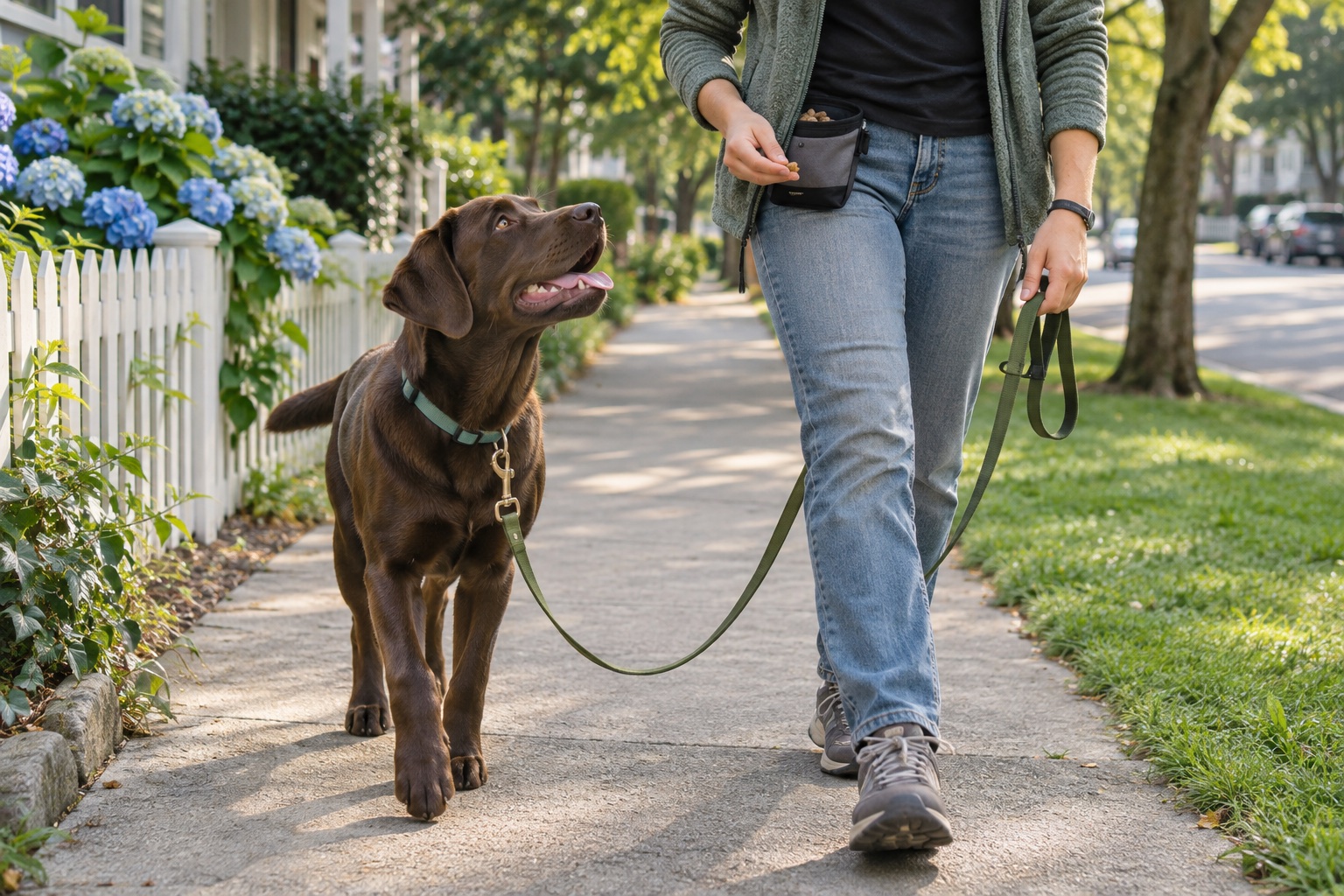
Reward slack in the lead, build in exploration and reduce difficulty when the walk becomes a struggle.
Cover illustration generated with AI. About our images.
Leash skills are easier when the walk meets the dog's needs as well as the person's. Constant pulling often reflects excitement, learned habits or an environment that is too difficult. The goal is a comfortable lead, not uninterrupted eye contact or a rigid marching position.
Practice before the busy route
Begin in a quiet space with secure, comfortable equipment. Reward your dog for standing near you, then take a few steps and reward again while the lead is slack. Small food rewards are useful; permission to sniff can be equally valuable in the right moment.
Respond smoothly to tension
If the lead tightens, stop gently before you are dragged. Invite your dog back toward you and continue when the line relaxes. A calm change of direction can help in a suitable space, but avoid jerking, sudden reversals or pretending to fall.
Keep the challenge easy enough that the dog can succeed. If every step creates tension, reduce distractions or shorten the session.
Make exploration part of the plan
Use a clear release cue for sniffing breaks and a separate cue for moving on. Allow safe pauses rather than pulling away from every interesting smell. Dogs learn more easily when cooperation still leads to enjoyable activity.
Address other walking difficulties
Leash biting may reflect overexcitement or frustration; offer a pause and an easier task. Refusing to move can indicate fear, fatigue, uncomfortable equipment or pain. Investigate the reason instead of dragging the dog forward.
Progress varies. A quiet, pleasant ten-minute practice is useful, but no technique guarantees a complete change in ten minutes.
Further reading
AVSAB: Humane training guidanceGeneral educational information. For individual health concerns, consult your veterinarian. Suggest a correction.