Moving House with a Cat: Keep One Small World Familiar
Protect a quiet base, preserve routines and introduce the new home at a pace your cat can manage.
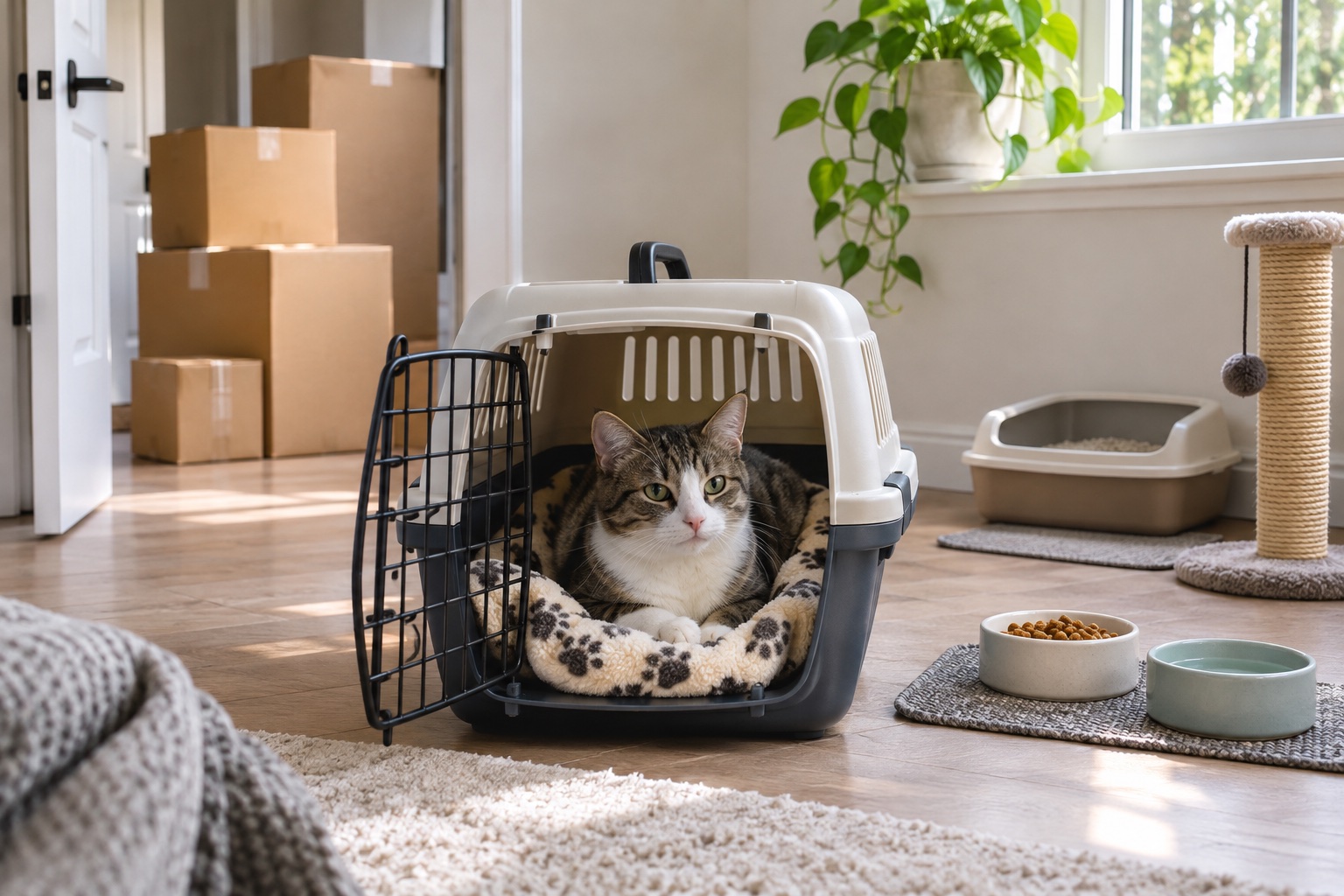
Protect one familiar, secure base during packing, transport and gradual exploration of the new home.
Cover illustration generated with AI. About our images.
Packing and moving can change a cat's world long before the journey begins. Familiar furniture disappears, doors stay open and strangers arrive. A clear plan protects safety and gives the cat a stable place to retreat during the disruption.
Prepare before moving day
Keep the carrier available and practice comfortable entry. Update microchip and identification details as appropriate. Set aside familiar food, litter, bedding, medication and cleaning supplies so they travel with you rather than disappearing into a moving box.
Secure a quiet room
During loading, place the cat in a safe room with essentials and a clear notice on the door. Make sure everyone helping knows it must remain closed. Check the carrier carefully before transport.
Rebuild the familiar base
At the new home, prepare a quiet starting room with separate food, water and litter areas. Open the carrier and let the cat emerge voluntarily. Use familiar bedding and maintain the normal feeding routine where possible.
Expand gradually
Allow exploration of additional safe areas when eating, toileting and behavior are settled. Keep the original room available. Check windows, balconies, hiding gaps and appliances before access expands.
Do not let an outdoor-access cat immediately roam an unfamiliar area; discuss a suitable settling and safety plan with your veterinarian.
Monitor intake and health throughout the move. Persistent refusal to eat, marked lethargy or urinary difficulty needs prompt care, even when stress seems an obvious explanation.
General educational information. For individual health concerns, consult your veterinarian. Suggest a correction.