Outdoor Activities That Fit Your Dog's Body and Confidence
Choose walks, games and adventures by individual ability, then build fitness gradually.
Match the activity to the individual dog and increase demands gradually, with recovery guiding the plan.
Cover illustration generated with AI. About our images.
Outdoor activity can offer movement, exploration and time together. The right choice depends on age, health, fitness, temperament and conditions—not simply breed size. Begin with what your dog enjoys and can recover from comfortably.
Start with adaptable activities
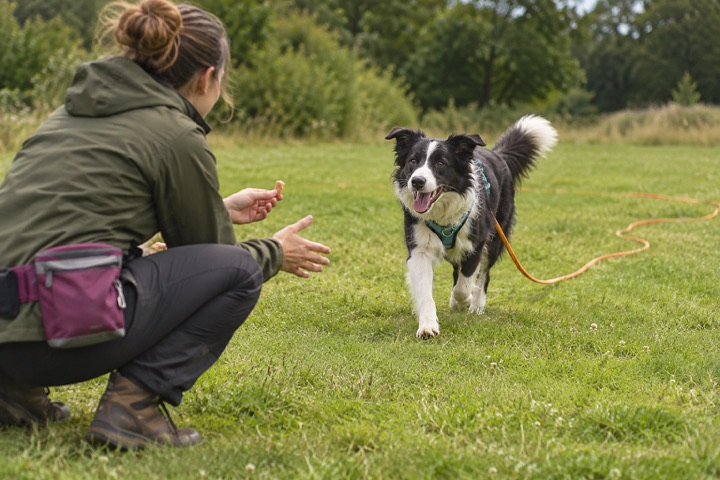
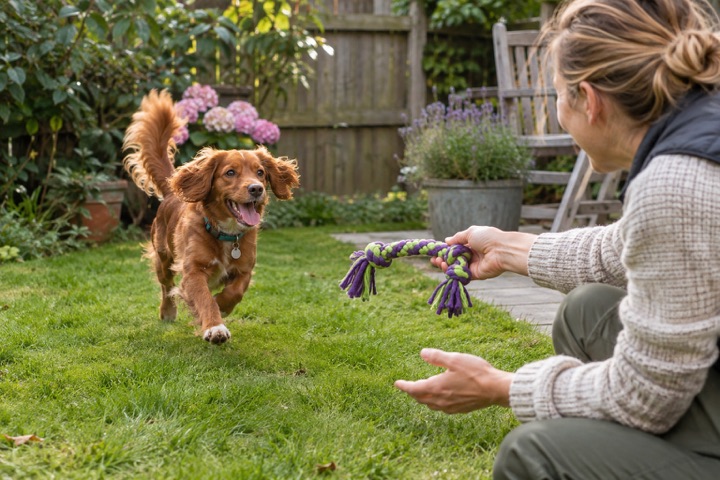
A sniffing walk is suitable for many dogs because pace and distance are easy to adjust. Short training games in a quiet area add variety. Controlled fetch can suit some dogs, but repetitive hard stops and high jumps are not appropriate for every body.
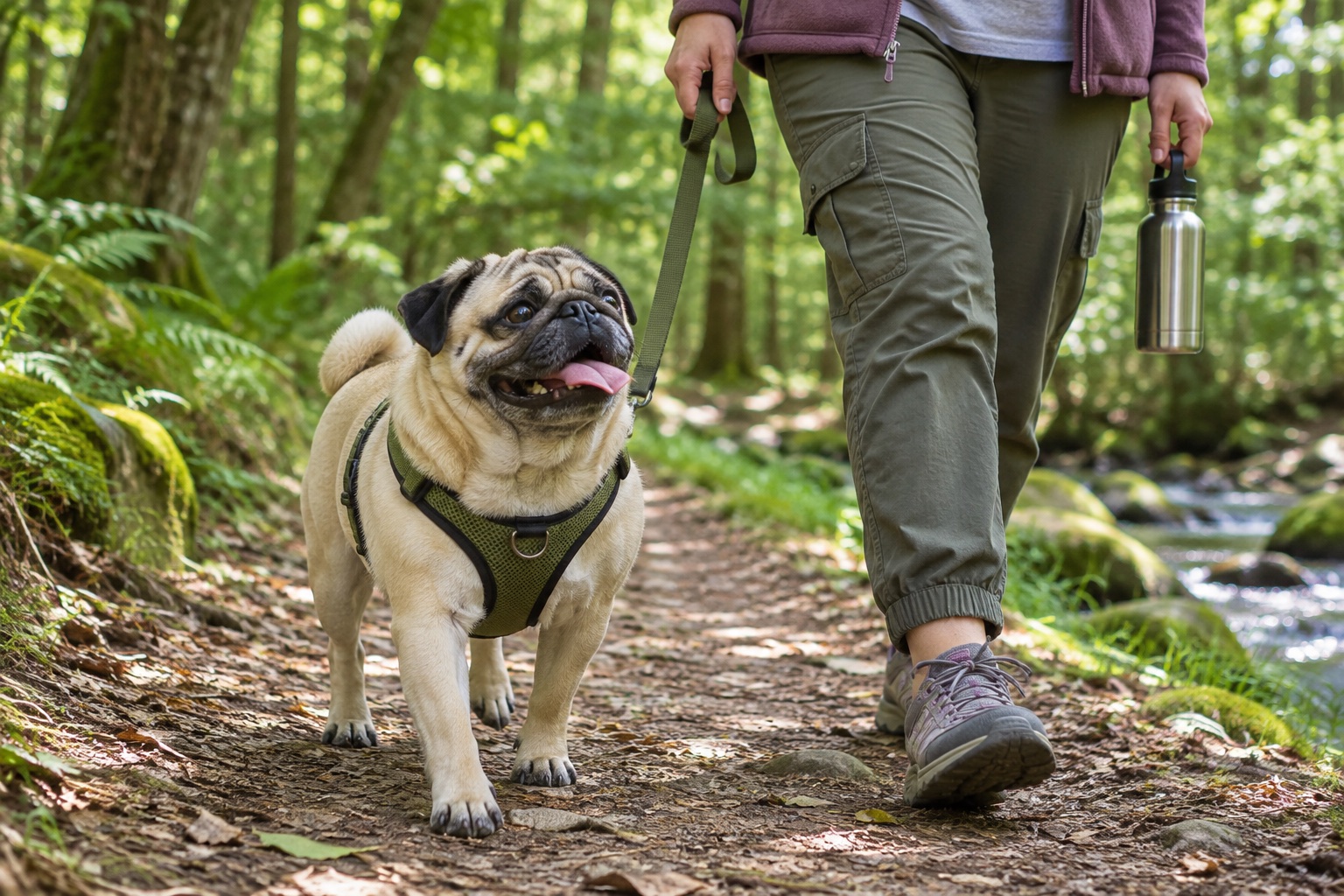
Hiking, running and swimming need more preparation. Discuss a new demanding routine with your veterinarian, particularly for growing dogs, seniors or pets with health concerns. Not every dog enjoys or swims well in water.
Build one challenge at a time
Increase duration, distance or terrain gradually. Avoid adding all three in one outing. Look at how the dog moves during the activity and the following day; stiffness or reluctance can reveal that the session was too much.
Prepare for the surroundings
Carry water, appropriate walking equipment and identification. Check weather, ground temperature, wildlife hazards and local access rules. Near water, consider a properly fitted flotation aid and a safe exit route, and avoid unsafe currents or contaminated water.
Make room to stop
Rest in shade, let the dog recover and shorten the plan when necessary. Heavy panting, weakness, limping or distress is a reason to stop and assess, not encouragement to push through.
An enjoyable outing leaves the dog comfortable afterward. Variety and thoughtful pacing are more useful than trying to exhaust it every time.
Further reading
AVSAB: Humane training guidanceGeneral educational information. For individual health concerns, consult your veterinarian. Suggest a correction.