Your New Dog's First Training Priorities
Focus on nine useful skills that help a newly arrived dog feel secure and navigate everyday life.
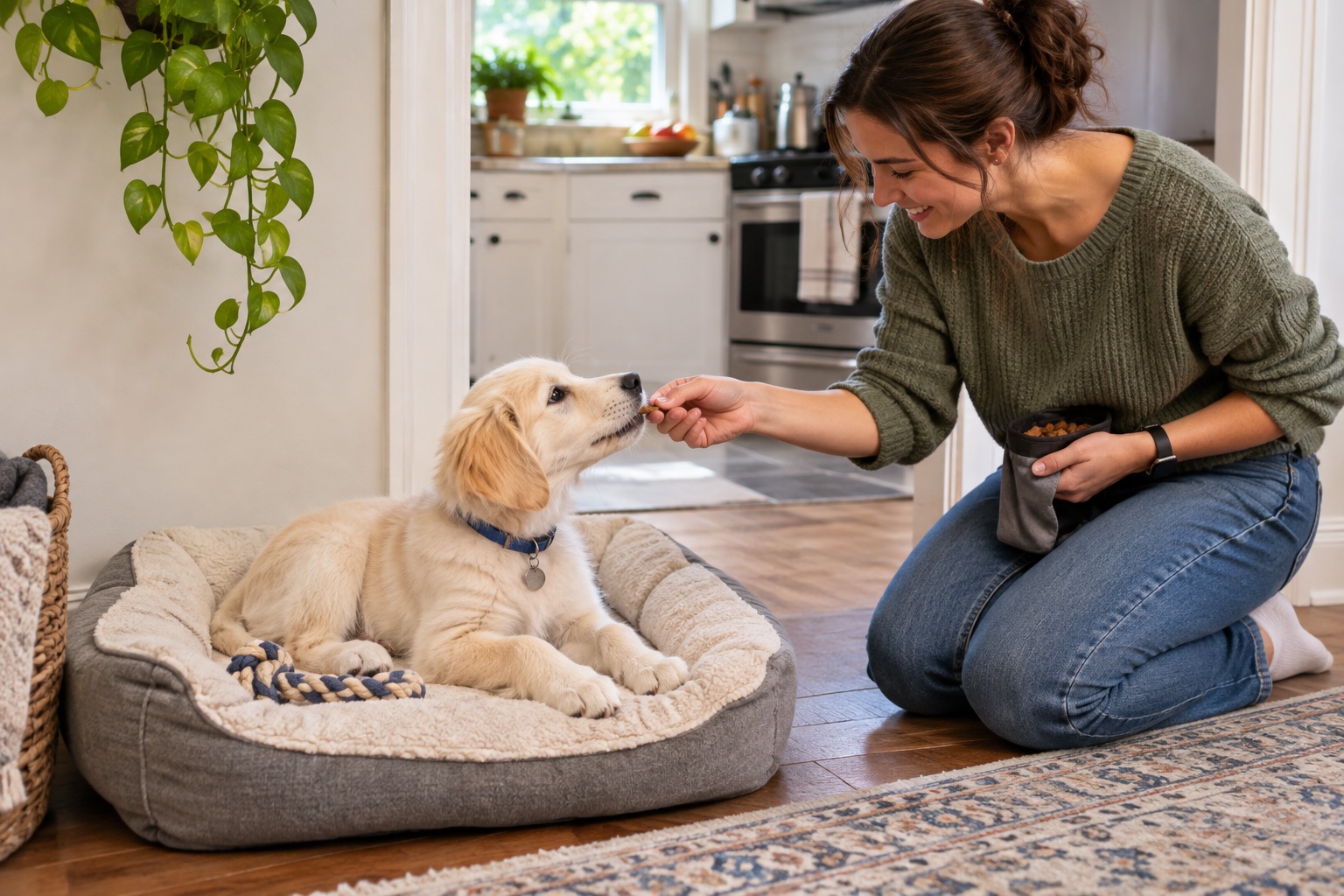
Prioritize safety and routine, and let confidence grow before adding harder challenges.
Cover illustration generated with AI. About our images.
A new dog is learning the household even before formal training begins. Predictable meals, rest and toilet opportunities make that learning easier. Begin with practical skills and gentle management rather than asking for a long list of tricks on the first day.
Five safety foundations
- Name response: reward looking toward you when the name is spoken once.
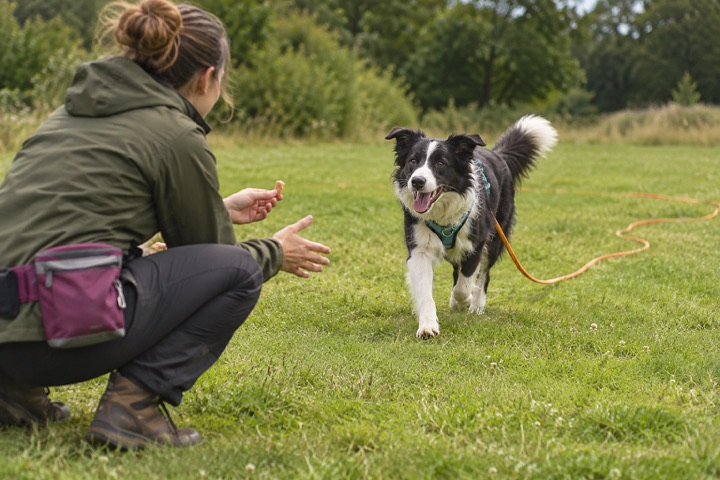
- Recall: practice short, happy returns in a secure space.
- Wait: teach a brief pause and a release cue while doors remain physically managed.
- Leave it: reward turning away from a harmless distraction.
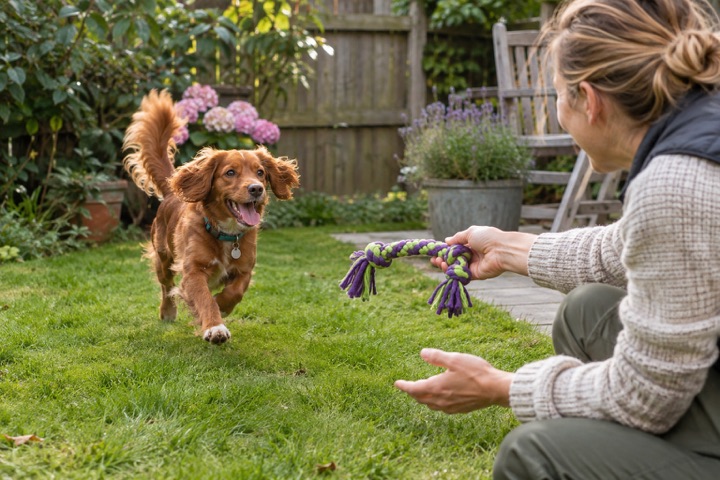
- Drop: exchange a safe item for something better, avoiding a chase or tugging contest.
Four skills for daily life
- A toilet routine: offer frequent visits to the same suitable area and reward after finishing.
- Sit: use a gentle lure or capture a natural sit without pressing the body.
- Down or settle: reward a comfortable resting position on a non-slip surface.
- Loose-leash walking: begin with a few rewarded steps and include sniffing breaks.
Keep the learning environment simple
Use short sessions, small rewards and consistent words. Everyone in the household should agree on the behavior to encourage. Prevent access to dangerous items and use gates or supervised spaces so the dog does not repeatedly practice unwanted habits.
A dog that is frightened, overtired or uncomfortable may not be ready to learn. Give it rest and lower the difficulty.
Seek professional help for significant fear, guarding or distress when alone. These concerns need an individual plan, not stronger corrections. The first weeks are about building understanding and a sense of safety.
Further reading
AVSAB: Humane training guidanceGeneral educational information. For individual health concerns, consult your veterinarian. Suggest a correction.