How Much Should You Feed? A Practical Portion-Planning Guide
Use calories, life stage and body condition to find a starting portion and adjust it sensibly.
Use food energy and the pet's condition, not a universal percentage of body weight.
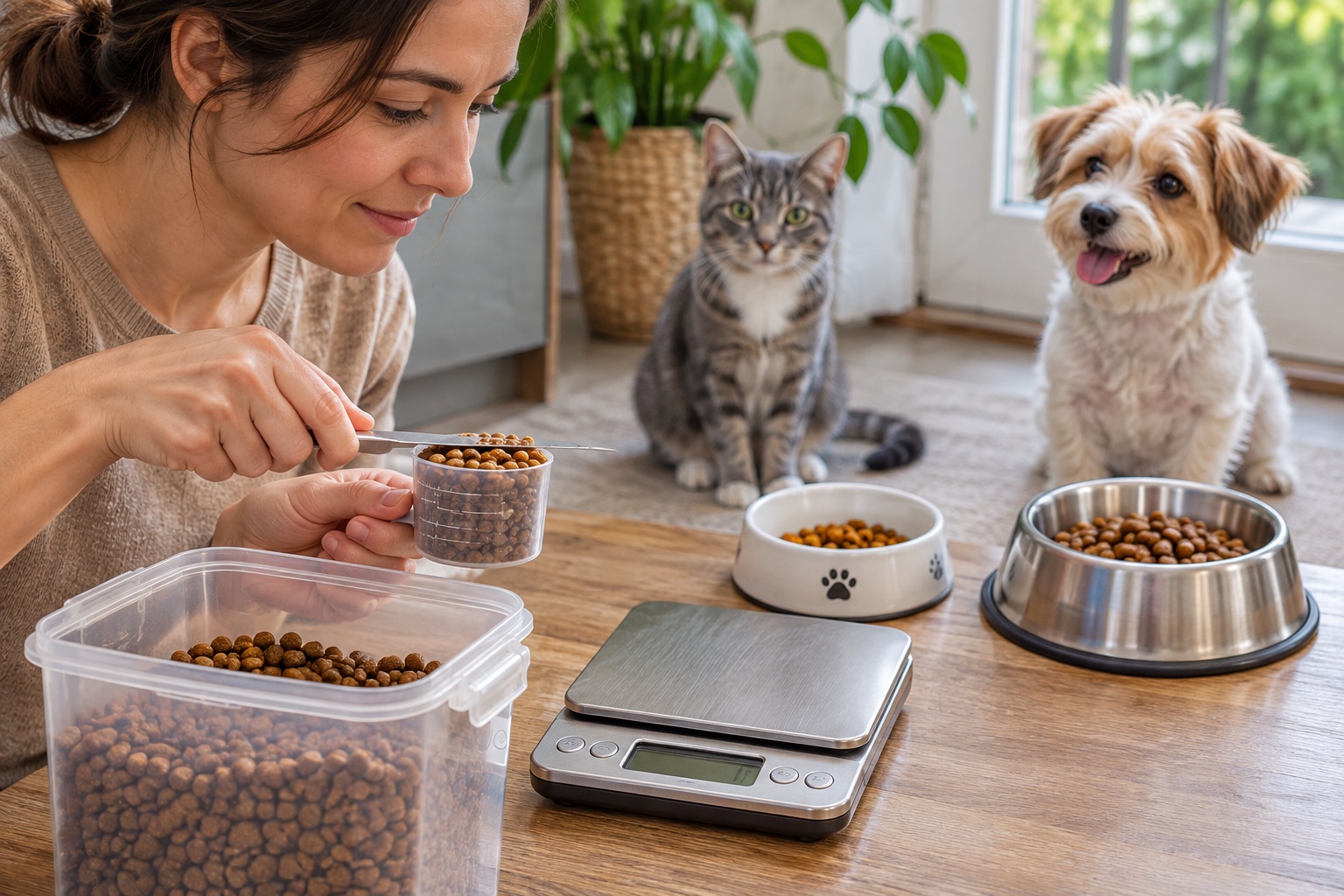
Cover illustration generated with AI. About our images.
Food weight alone cannot tell you the right portion. A gram of dry kibble and a gram of wet food contain very different amounts of energy. Feeding a fixed percentage of body weight to every dog and cat can therefore produce large errors.
Start with the animal and the food
Consider species, age, size, activity, neuter status and health. Use the food's life-stage statement and calorie information, and ask your veterinarian for a starting daily energy target where needed. Puppies, kittens and pets with medical conditions require particular attention.
Convert calories into a portion
Divide the planned calories from a food by its calories per gram to estimate grams per day. For example, a food providing 4 calories per gram supplies 200 calories in 50 grams. This is arithmetic, not a universal recommendation for any pet.
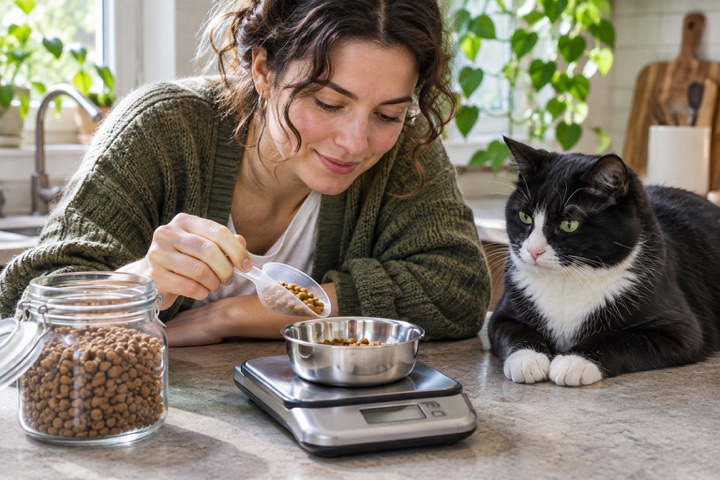
When mixing foods, account for each one separately and subtract planned treat calories from the total. A kitchen scale is more consistent than a loosely filled cup.
Choose a workable schedule
Divide the daily ration into meals suited to age and health. Young animals may need more frequent meals, and some cats prefer several smaller servings. A veterinarian can help coordinate meals with medication or a medical condition.
Reassess the result
Monitor weight trend, body condition, muscle and appetite. Stool changes can be useful observations, but normal stool alone does not prove the amount is correct. Adjust gradually with guidance rather than making large swings after one hungry-looking moment.
The best portion is a starting plan that you check and refine as the animal's needs change.
Further reading
WSAVA: Nutrition resourcesGeneral educational information. For individual health concerns, consult your veterinarian. Suggest a correction.