Calm Greetings: Teach Four Paws on the Floor
Make polite approaches rewarding and give guests a simple way to help your dog succeed.
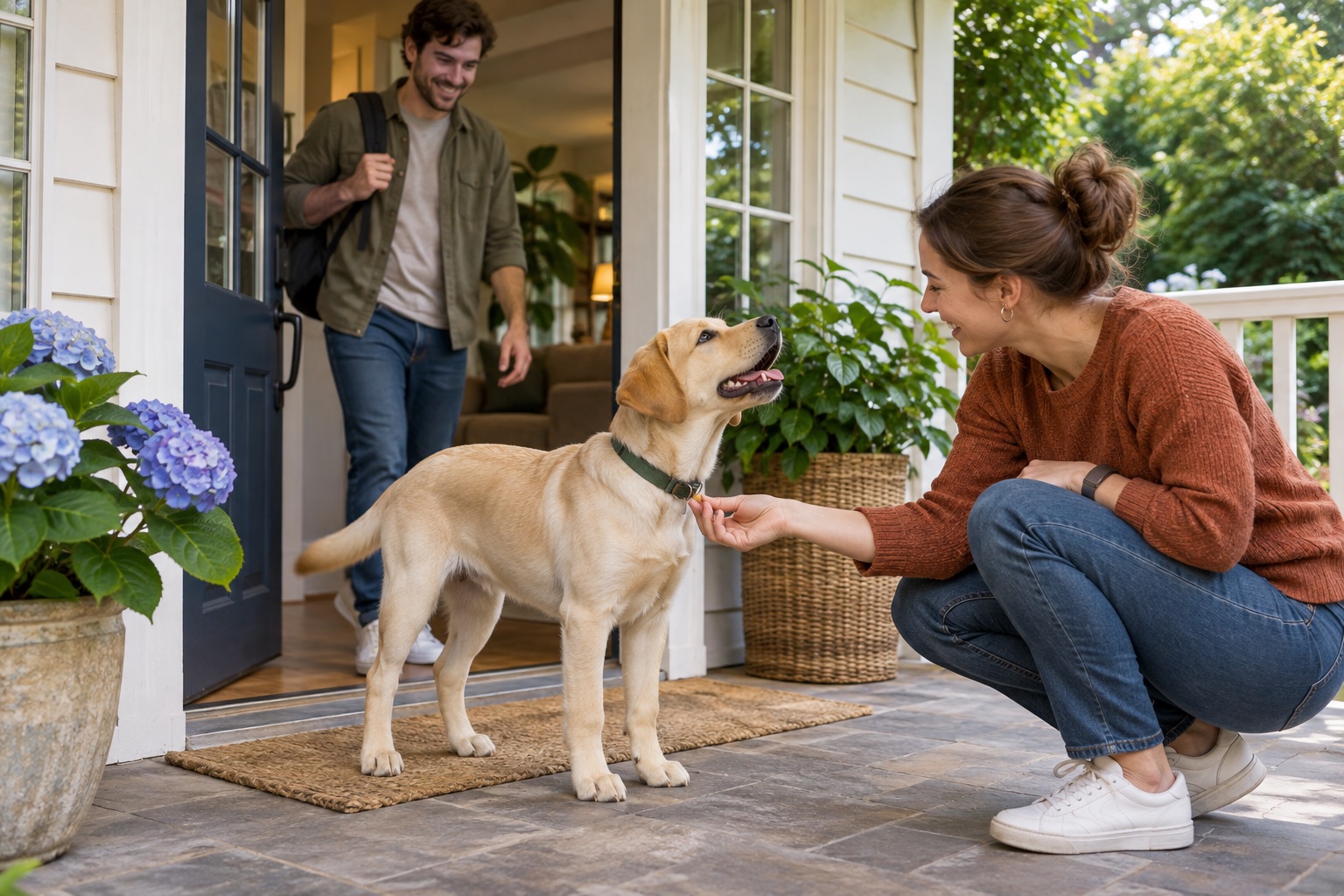
Reward grounded approaches and use barriers to keep real greetings within the dog's skill level.
Cover illustration generated with AI. About our images.
Jumping often works because it quickly earns attention. Teaching a calmer greeting means changing what gets rewarded and making the first moments at the door easier to manage. Begin with familiar people before practicing with exciting visitors.
Choose the behavior you want
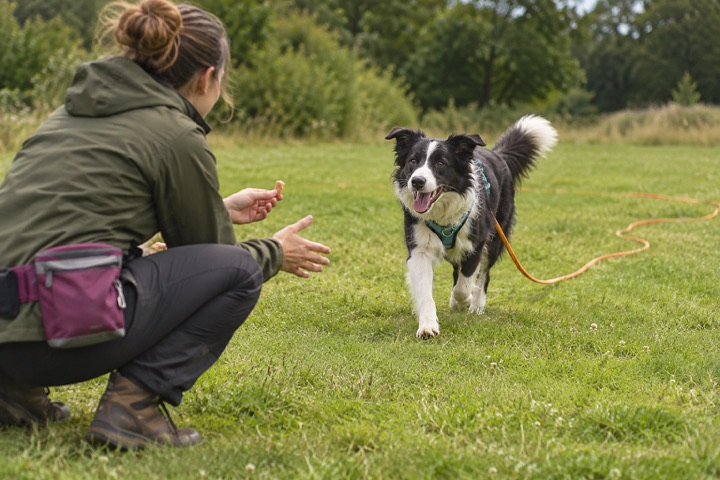
Four paws on the floor is a practical goal; a sit is optional if comfortable. Approach calmly and deliver attention or a small reward while the dog remains grounded. If jumping begins, pause interaction and create a little space without pushing, kneeing or shouting.
Practice easy repetitions
Ask a helper to approach slowly. Reward the dog before excitement rises, then let the helper step away and repeat. Short sessions with several successful approaches are more useful than a long greeting that repeatedly goes wrong.
Manage the real doorway
Use a gate, comfortable leash setup or separate resting area while guests enter. Let arrivals settle before inviting contact. Tell visitors exactly what to do: wait for a grounded approach, keep movements calm and avoid rewarding jumping accidentally.
Offer another job
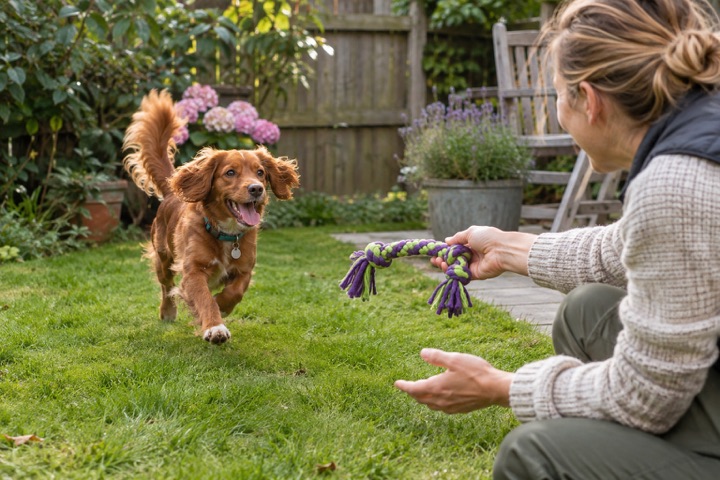
A mat cue or carrying a suitable toy can help some dogs organize their excitement. Teach the alternative separately so it is familiar before visitors arrive.
If greeting behavior includes fear, stiffening, growling or biting risk, do not treat it as ordinary exuberance. Arrange appropriate professional support and keep visitors safely separated.
Consistency makes the lesson clearer: calm contact brings the attention the dog was hoping for.
Further reading
AVSAB: Humane training guidanceGeneral educational information. For individual health concerns, consult your veterinarian. Suggest a correction.