
Redirect Cat Scratching Without a Battle Over the Sofa
Meet the need to scratch with the right surface, rewarding placement and temporary furniture protection.
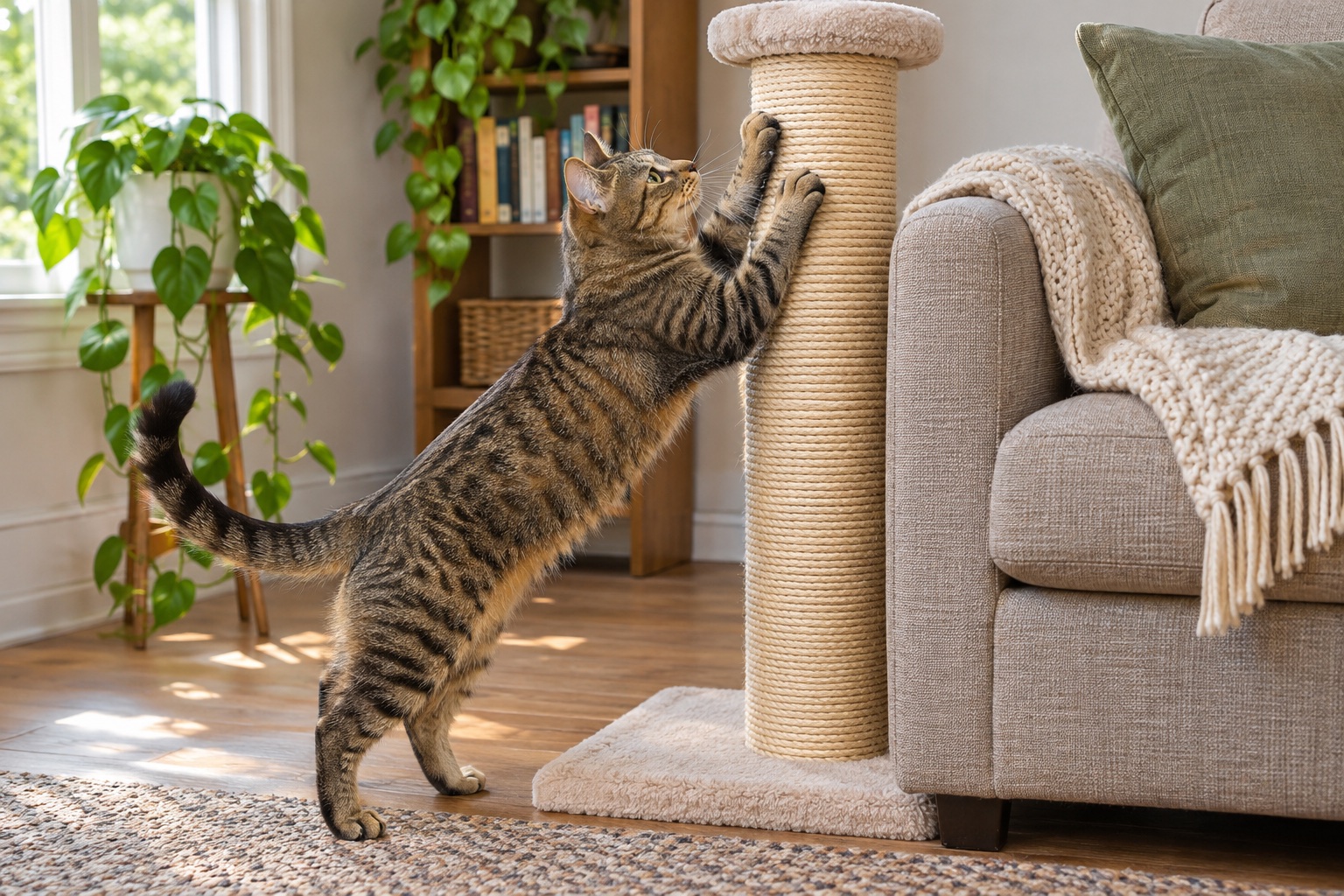
Provide a stable, appealing scratcher exactly where the cat already wants to scratch.
Cover illustration generated with AI. About our images.
Scratching stretches the body, maintains claws and leaves familiar marks. A cat does not need to stop scratching; it needs appealing places to do it. Protecting furniture works best when the alternative makes sense from the cat's point of view.
Match the preferred surface
Watch whether your cat scratches vertically or horizontally and which textures it chooses. Offer a stable post tall enough for a full stretch, a sturdy cardboard pad or another suitable surface. A wobbling post may be avoided even when its material is appealing.
Place it where scratching happens
Start beside the targeted sofa corner, near a waking place or along a familiar route. A scratcher hidden in an unused room is unlikely to solve a problem in the living room. Use more than one location if the cat has several favorite spots.
Reward voluntary use
Praise, a small treat or a brief game can follow scratching on the new surface. Invite investigation with play nearby, but do not grip the paws and drag them down the post. Some cats enjoy catnip; others do not respond to it.
Protect while the habit develops
Use a safe furniture cover or a suitable temporary barrier and inspect it for loose edges or chewing risks. Trim claws gently when appropriate, without confusing nail care with removal of the need to scratch.
Avoid shouting, spraying water or strong scented deterrents. Declawing is not ordinary nail trimming and is not a solution to a furniture preference.
Move a successful scratcher only gradually, if at all. The location may be part of the reason it works.
Further reading
AVSAB: Humane training guidanceGeneral educational information. For individual health concerns, consult your veterinarian. Suggest a correction.