Turn the Cat Carrier into a Familiar Resting Place
Build voluntary entry and comfortable handling long before the next journey.
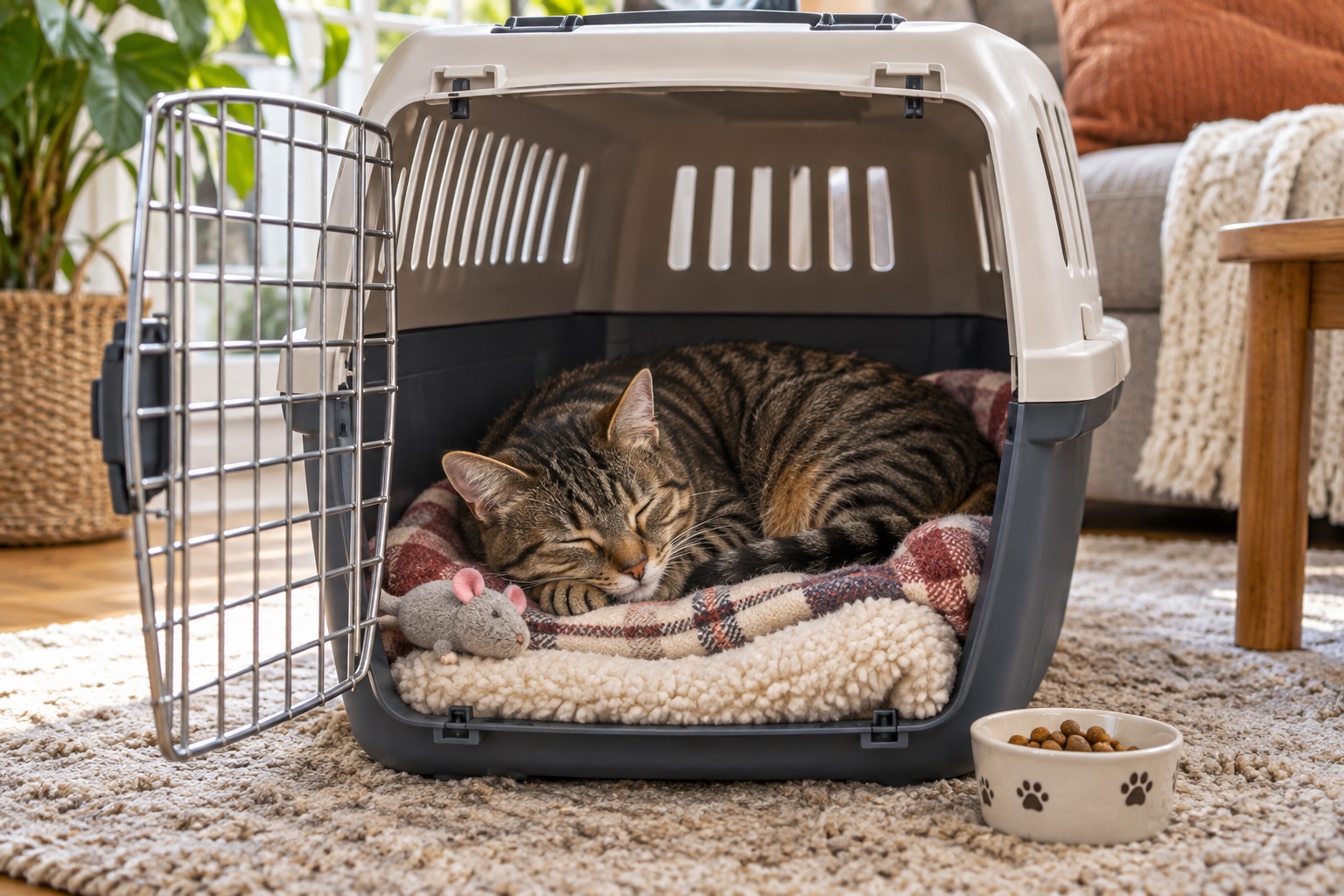
Reward voluntary entry and introduce door closure, lifting and travel as separate skills.
Cover illustration generated with AI. About our images.
A carrier that appears only before stressful trips can become a warning signal. Keeping it available at home gives your cat a chance to learn a different association. Start when there is no immediate deadline.
Make it part of the room
Choose a secure, comfortable carrier and leave the door open or remove it when the design allows. Add familiar bedding and place it in a quiet location. Reward investigating nearby, then entering voluntarily. Do not shut the door the first time the cat steps inside.
Build in small stages
Offer rewards farther inside and let the cat leave. When resting inside is comfortable, briefly move the door, then close it for a moment and reopen. Increase duration only while the cat remains relaxed.
Add lifting and travel separately
Lift the carrier gently for a short moment before attempting a walk through the home. Keep it level and supported. Later, introduce the parked vehicle and brief journeys as separate steps. A familiar blanket may help, provided ventilation remains clear.
Plan around unavoidable appointments
If a visit is approaching and your cat is still frightened, contact the clinic for handling and travel advice. Medication may be appropriate under veterinary guidance. Do not postpone necessary care indefinitely while waiting for perfect training.
Leave the carrier available after returning home. Familiarity grows through ordinary, uneventful experiences as much as through formal lessons.
General educational information. For individual health concerns, consult your veterinarian. Suggest a correction.