Teach a Hand Target: A Small Skill with Everyday Uses
A voluntary nose touch can help guide movement, redirect attention and make training more playful.
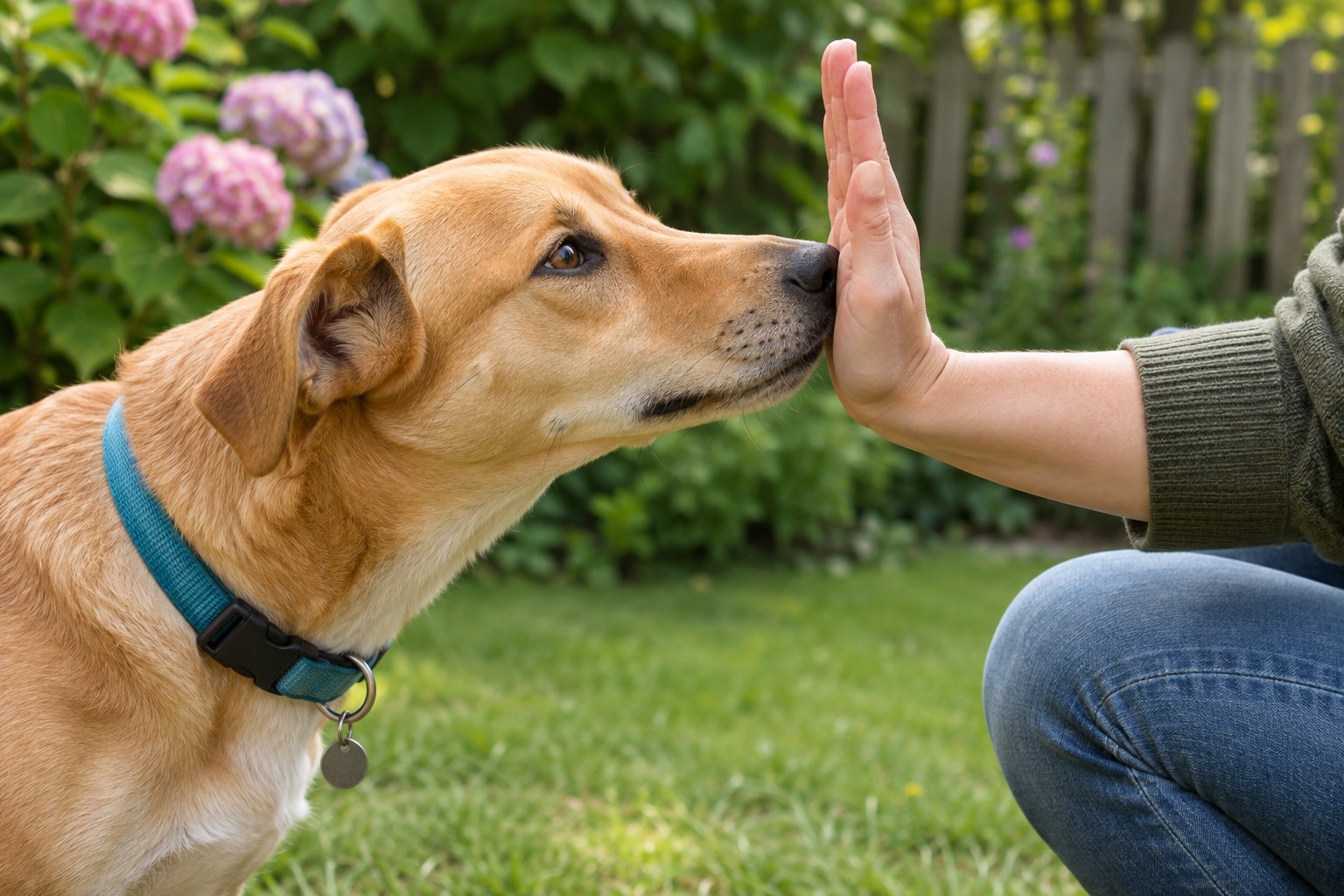
Reward a voluntary nose touch and use it to guide comfortable movement in manageable situations.
Cover illustration generated with AI. About our images.
A hand target asks a dog to touch an offered palm with its nose. It is a simple behavior that can become useful for positioning, turning or reconnecting during an easy training session. Begin in a quiet place with small rewards ready.
Capture a curious touch
Offer an open hand a short distance from the dog's nose without pressing it into the face. Mark an interested nose touch with a consistent word and deliver a reward from the other hand. Remove the target between repetitions.
If the dog is unsure, reward a glance or small movement toward the hand first. Avoid holding it there until the dog becomes frustrated.
Add a clear cue
When touching is predictable, say a word such as 'touch' just before presenting the hand. Practice at slightly different heights and positions within comfortable reach. Do not ask for awkward jumps or turns.
Use it in ordinary situations
Invite a step toward a mat, a gentle turn away from a mild distraction or a change of position during a game. Reward the completed touch and keep the cue worthwhile.
Respect the limits
A hand target should not lure a fearful dog into an overwhelming situation or replace a leash near hazards. If the dog cannot respond, create distance and reduce the challenge.
Keep practice brief and end with an easy success. The skill is valuable because it offers clear, voluntary movement—not because it makes every difficult situation disappear.
Further reading
AVSAB: Humane training guidanceGeneral educational information. For individual health concerns, consult your veterinarian. Suggest a correction.