Five Ways Cats Share a Life with Their People
From close shadow to independent companion, feline affection can take more than one familiar form.

Judge the bond by comfort and voluntary contact, not by how closely a cat matches a human relationship label.
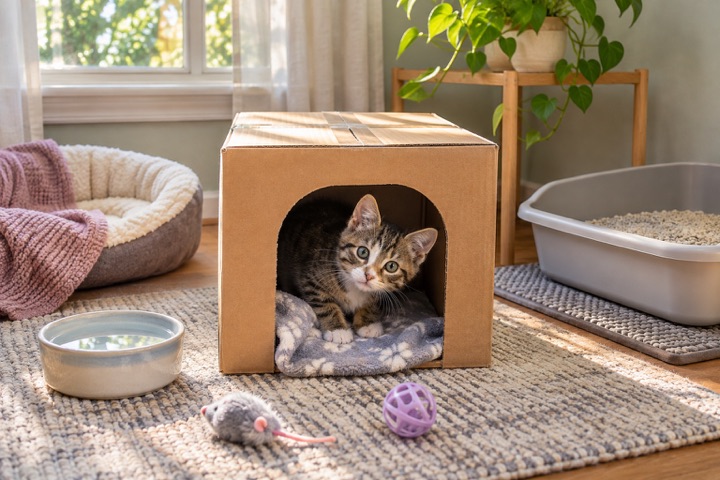
Cover illustration generated with AI. About our images.
Some cats greet every movement; others quietly choose the far end of the same sofa. Both can be part of a comfortable relationship. Human labels are useful as playful descriptions, but they cannot tell us exactly how a cat understands its person.
The close companion
This cat often follows you between rooms and seeks reassurance nearby. Enjoy the company while also providing resting places and gentle practice with comfortable independence. Sudden clinginess deserves attention if it is a change.
The easygoing friend
A friendly cat may invite play, rest near you and leave when it has had enough. Respecting that rhythm helps keep contact pleasant and predictable.
The daily partner
Some cats become part of routines: waiting near the desk, visiting at breakfast or settling beside evening reading. Those repeated moments can be meaningful without requiring constant touch.
The peaceful roommate
A more independent cat may prefer shared space to physical affection. Look for relaxed posture, comfortable eating and voluntary proximity. Lack of lap time is not proof of a poor bond.
The enthusiastic organizer
A vocal cat that reminds you about meals can seem like the household manager. Predictable feeding, play and attention can keep the routine enjoyable without rewarding every demand immediately.
Leave room for change
Age, health, household events and confidence can alter how a cat interacts. Hiding, irritability or a sudden change in social behavior may need a health check.
Whatever description feels familiar, the best foundation is the same: reliable care, safe choices and affection offered in a form the cat welcomes.
General educational information. For individual health concerns, consult your veterinarian. Suggest a correction.