Understanding Cat Stress: From Warning Signs to a Safer Space
Recognize tension, reduce avoidable pressure and know when a change in behavior needs veterinary attention.
Give the cat control over contact and space, while taking physical symptoms seriously.
Cover illustration generated with AI. About our images.
A move, unfamiliar visitor or conflict with another cat can change how safe a home feels. Stress may be brief or persistent, and cats often express it quietly. The first step is to notice the change without assuming that every symptom is behavioral.
Read the whole picture
Look for increased hiding, reduced play, avoidance of touch, overgrooming or changes in litter-box use. Flattened ears, a tense body and a rapidly moving tail can signal discomfort. Appetite changes, vomiting and unusual breathing can also reflect illness and should not simply be attributed to nerves.
Make retreat easy
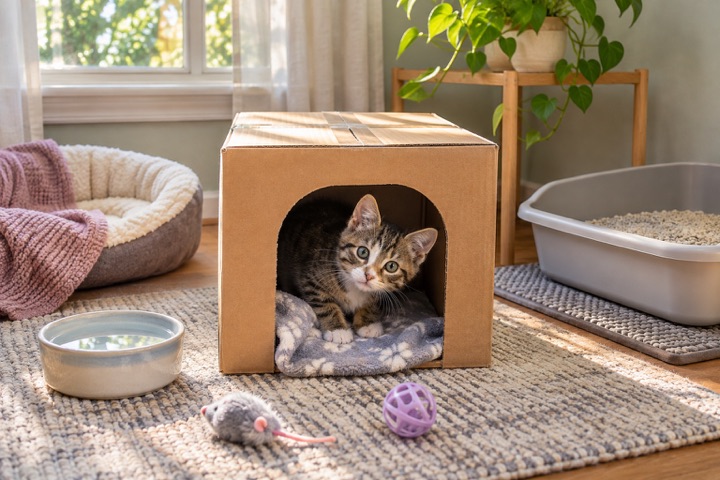
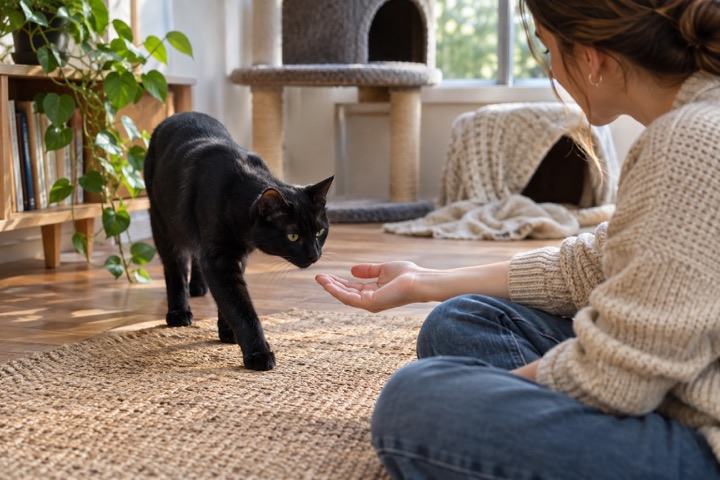
Provide a covered bed or sturdy box in a quiet area, with familiar bedding and a clear route out. Let the cat choose to emerge. Reaching into a hiding spot or carrying it to meet visitors can remove the very sense of control it needs.
Reduce competition
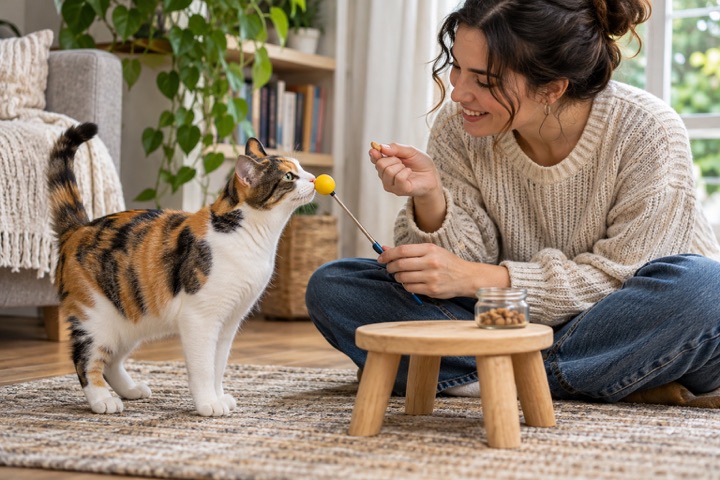
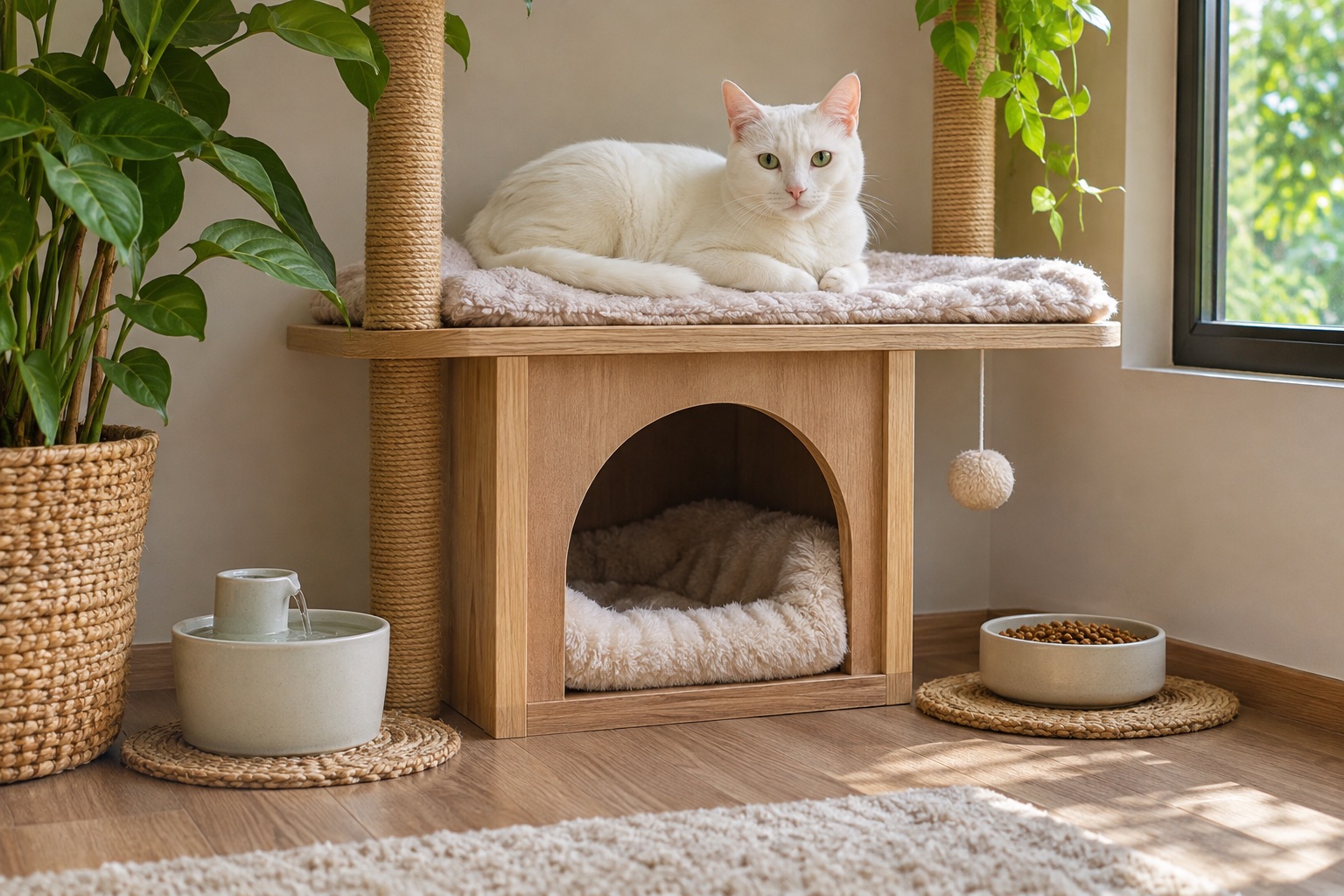
Spread water, food, litter boxes, scratching surfaces and resting places across the home. Watch whether another pet blocks a doorway or resource. Add stable elevated spaces and short, gentle play sessions when your cat is interested.
Keep feeding and cleaning routines predictable. Introduce household changes gradually when possible, and reduce loud or strongly scented activity nearby.
Use extra support thoughtfully
Pheromone products may help some cats as part of a broader plan, but they are not a substitute for accessible resources or treatment of pain. Discuss persistent anxiety with your veterinary team.
Not eating, self-injury, repeated vomiting or difficulty urinating needs prompt assessment. Breathing difficulty is an emergency. A calm room can support recovery, but it should never delay necessary care.
General educational information. For individual health concerns, consult your veterinarian. Suggest a correction.