Teach Your Dog to Settle on a Mat
Build a comfortable place cue through small steps, clear releases and rewards for genuine relaxation.
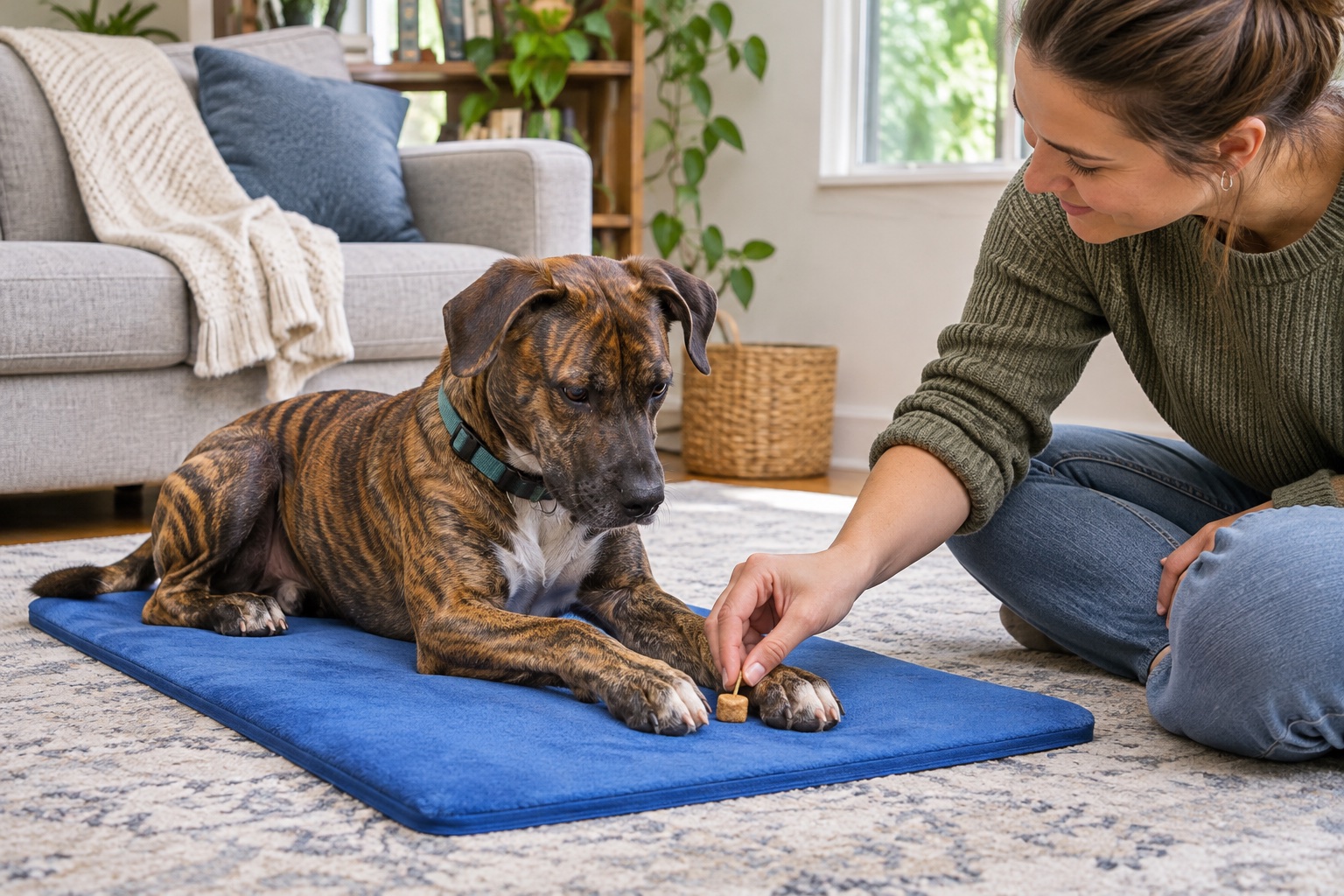
Make the mat rewarding, teach a release and build duration and distractions separately.
Cover illustration generated with AI. About our images.
A mat can become a useful resting place during meals, visitors or quiet work. Teach it as a safe option with a clear meaning, not as a punishment or a demand to remain still through an overwhelming situation.
Reward the first investigation
Place the mat on a non-slip surface in a quiet room. Mark and reward looking at it, approaching it and stepping onto it. Deliver rewards on the mat so the location becomes worthwhile. You do not need to push the dog into position.
Build the behavior gradually
Reward all four paws on the mat, then a comfortable sit or down if the dog offers it. Add a cue such as 'mat' when the movement is becoming predictable. Use a separate release word and toss a reward away to reset the exercise.
Add duration before distance
At first, reward frequently for staying comfortably in place. Increase the interval in small steps. Then take one step away and return to reward. If your dog leaves, make the next repetition easier rather than repeatedly sending it back with frustration.
Practice in real situations
Move the mat to another quiet room before trying it near visitors or food preparation. Add one distraction at a time. Provide breaks, and ensure the dog can meet its needs for movement, water and toileting.
A dog lying down with a tense body is not necessarily relaxed. Watch breathing, posture and the ability to disengage from surrounding activity. The most useful mat behavior is one that helps the dog feel comfortable, not merely look motionless.
Further reading
AVSAB: Humane training guidanceGeneral educational information. For individual health concerns, consult your veterinarian. Suggest a correction.