A Cat Shedding More Than Usual: What to Look For
Consider the skin, grooming pattern and overall health before assuming a seasonal coat change.
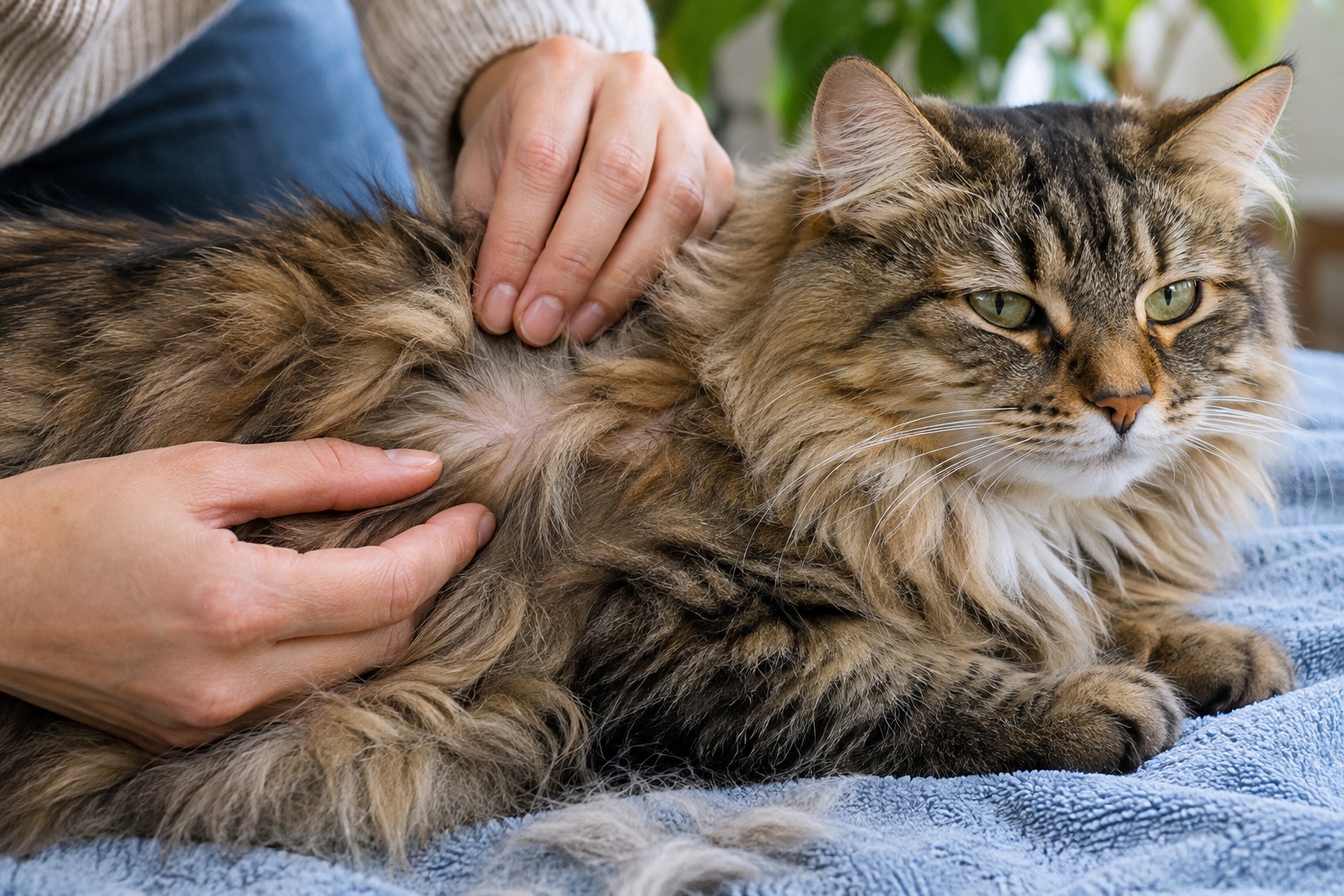
Look for skin damage and altered grooming, and avoid treating unexplained hair loss with supplements alone.
Cover illustration generated with AI. About our images.
Cats vary widely in how much they shed. More fur on a brush can be normal, but a sudden change is worth comparing with the rest of the cat's routine. Look for discomfort and visible hair loss rather than judging only the amount on your clothes.
Separate shedding from overgrooming
Loose hairs throughout an otherwise healthy coat differ from broken hairs, bald patches or repeated licking of one area. Check gently for redness, flakes, scabs and parasites. Avoid forceful handling if the skin appears sore.
Consider recent changes
Season, indoor conditions, a new food, household stress or a grooming change may be relevant. They do not establish a cause on their own. Skin disease, parasites, pain and other medical problems can also affect the coat.
Record when the change began and whether appetite, weight, thirst or activity has changed alongside it. Photographs taken in similar light can help you track a patch.
Keep care simple while seeking advice
Use a suitable brush gently and continue an appropriate complete diet. Do not choose a food solely because it reaches a particular protein percentage, or add egg, fish and supplements as an improvised cure.
Avoid human skin treatments and essential oils, which may be unsafe for cats.
Arrange an examination when needed
Bald areas, wounds, marked itching, ongoing overgrooming or a sudden substantial change warrants veterinary assessment. A coat problem may need treatment, but the right treatment depends on the cause.
Seasonal shedding can be ordinary. The useful habit is noticing when your cat's version of ordinary changes.
General educational information. For individual health concerns, consult your veterinarian. Suggest a correction.