A Cat Who Dislikes the Brush: Make Grooming More Comfortable
Choose the right tool, work in small sections and listen when your cat asks for a pause.
Make grooming brief and comfortable, and investigate new sensitivity before pushing ahead.
Cover illustration generated with AI. About our images.
Grooming can feel unpleasant when a tool catches a tangle, scratches the skin or arrives without warning. A cat that resists the brush is giving you information. Start by changing the experience rather than trying to hold the cat still for longer.
Check comfort first
A sudden dislike of grooming may reflect sore skin, mats or pain when the body is moved. Arrange a veterinary check for new sensitivity, bald patches, wounds or a marked change in behavior. Do not assume every refusal is a personality trait.
Match the tool to the coat
A soft brush may help introduce handling, while some coats also need a suitable comb to reach tangles. Metal tools are not automatically wrong; tooth spacing, smoothness, technique and the individual coat matter. Ask a groomer or veterinary team to demonstrate if unsure.
Begin where touch is welcome
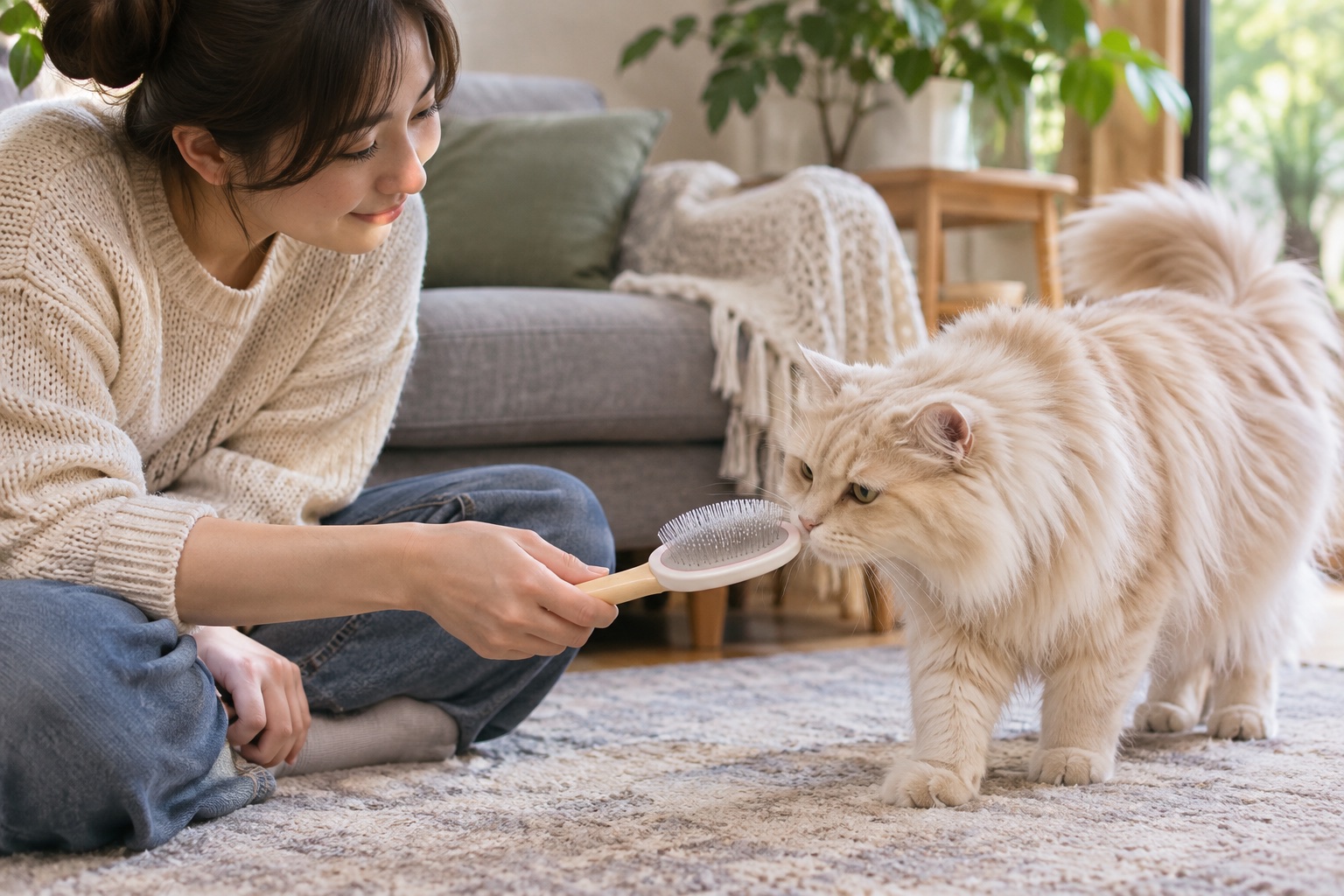
Offer the brush to inspect, reward calm interest and try one gentle stroke along an accepted area. Follow the coat's direction and avoid pulling. Keep early sessions very short, then gradually work through small sections over several days.
Do not chase the cat with the brush or groom immediately after an exciting game. A stable surface and a quiet moment make participation easier.
Treat mats carefully
Tight mats can pull painfully on delicate skin. Do not cut them out with scissors close to the body or repeatedly tug at them. Professional removal may be safer.
End while your cat is still comfortable. A few good strokes repeated regularly can achieve more than an occasional exhausting battle.
General educational information. For individual health concerns, consult your veterinarian. Suggest a correction.